Industry application
Prepared Foods
Ready meals, sauces and multi-component dishes
Filling, dosing and tray-sealing integration for central kitchens and private-label ready meal producers serving EU and US retailers.
Application challenges
Where prepared-meal lines typically lose consistency
Viscosity shifts when butter- or oil-based products cool between cooking and filling
Solids and liquids must stay in proportion in every tray
Frequent SKU and flavour changeovers demand fast, validated cleaning
Retailer and export audits require material and process documentation
Line workflow
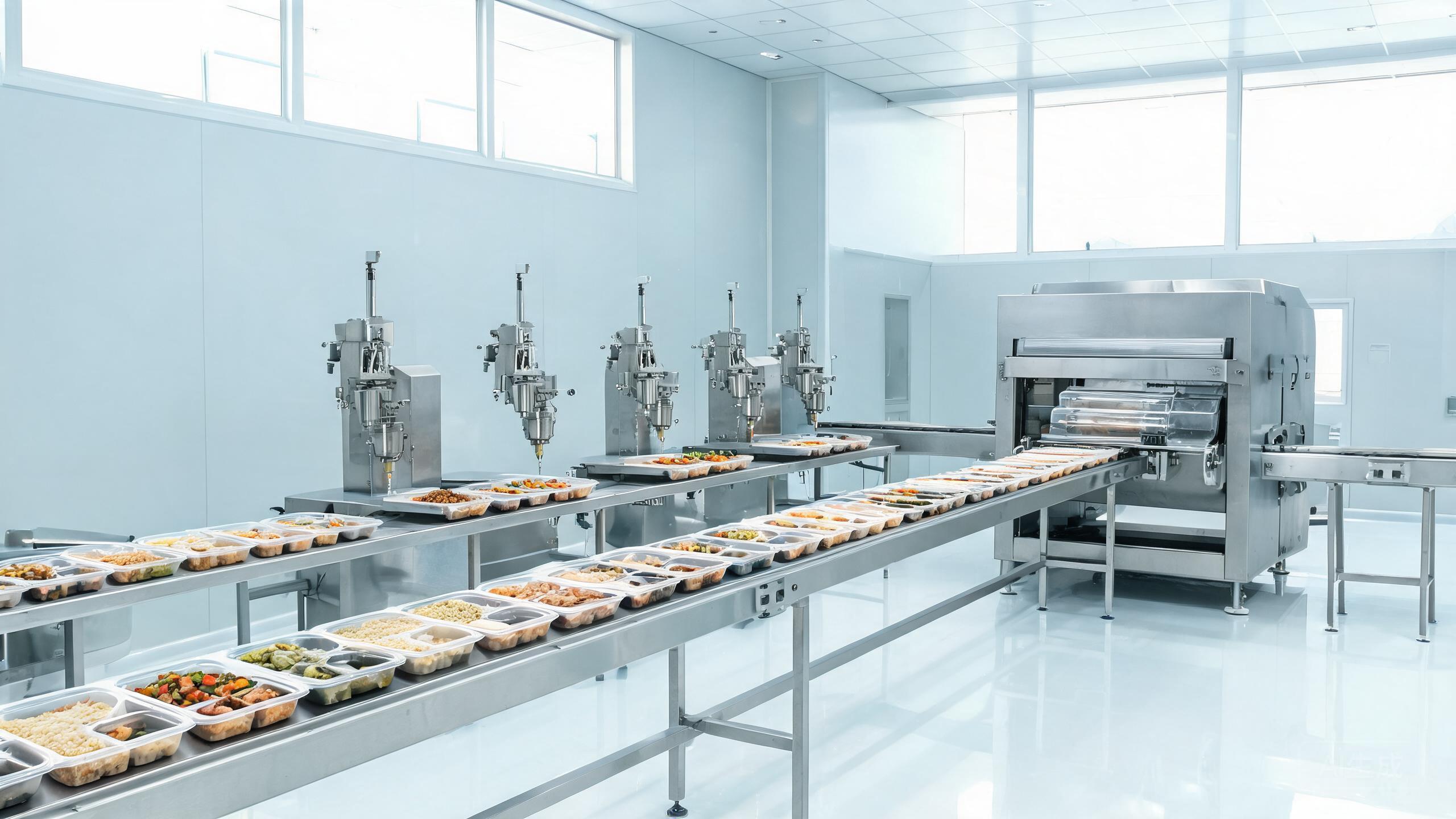
A multi-component ready-meal line, station by station
The GTX-1800 + GT-L60 configuration below represents the typical prepared-foods integration. Throughput parameters are application-tested rather than assumed.
Product held at process temperature
Jacketed hopper options keep butter- and fat-based sauces homogeneous between cooking and filling, limiting viscosity shift during cooling.
Particulate dosing at the first station
GTX-1800 portions the solids-bearing component with wide-passage valve geometry that preserves vegetable and meat inclusions.
Metered liquid at the second station
A GT-L60 flow-meter station adds brine, sauce or broth on the same conveyor, synchronised to tray indexing under one recipe.
Sealing and documentation
Trays, cups or pouches move to sealing with a clean rim, while material declarations and technical-file inputs are compiled for retailer and export audits.
Filling range, speed and accuracy for this configuration are marked pending technical confirmation. They are established with your recipe, tray format and dose weight during a timed sample test, then attached to the purchase contract.
Questions prepared-meal producers usually ask
Can one line fill solids and liquids separately into the same tray?
Yes — a GTX-1800 particulate station and a GT-L60 metered dosing station can be synchronised on one conveyor with shared recipe control, so solids and brine or sauce land at separate stations in repeatable proportion.
How do you handle sauce that thickens while it cools?
The GTX platform supports jacketed and agitated hopper options that hold the product in a controlled state up to dosing. Actual temperature strategy is validated with your product during the sample test.
Which retail packaging formats are supported?
Trays and cups with inline sealing are standard; stand-up pouches are a project-specific configuration. Retailer flange and seal dimensions should be provided at quotation stage.
Recommended platforms
Equipment matched to this industry
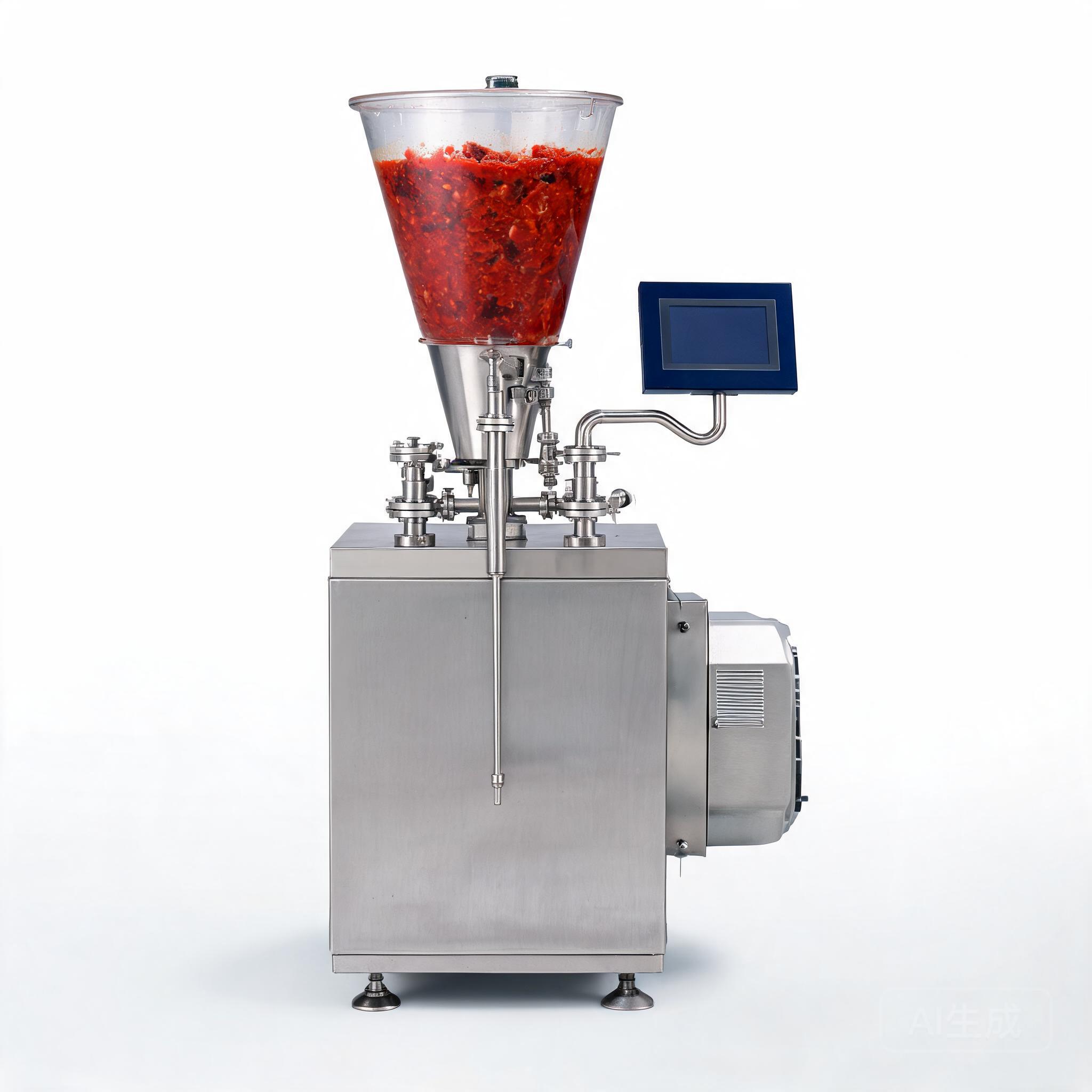
GTX-1800
GTX-1800 High-Viscosity & Particulate Filling Machine
Automatic servo-driven filling platform for high-viscosity products containing soft or chunky particles — butter-based hotpot base, chili sauce, meat sauces and wet pet food — across bottles, jars, cups and trays.
Platform details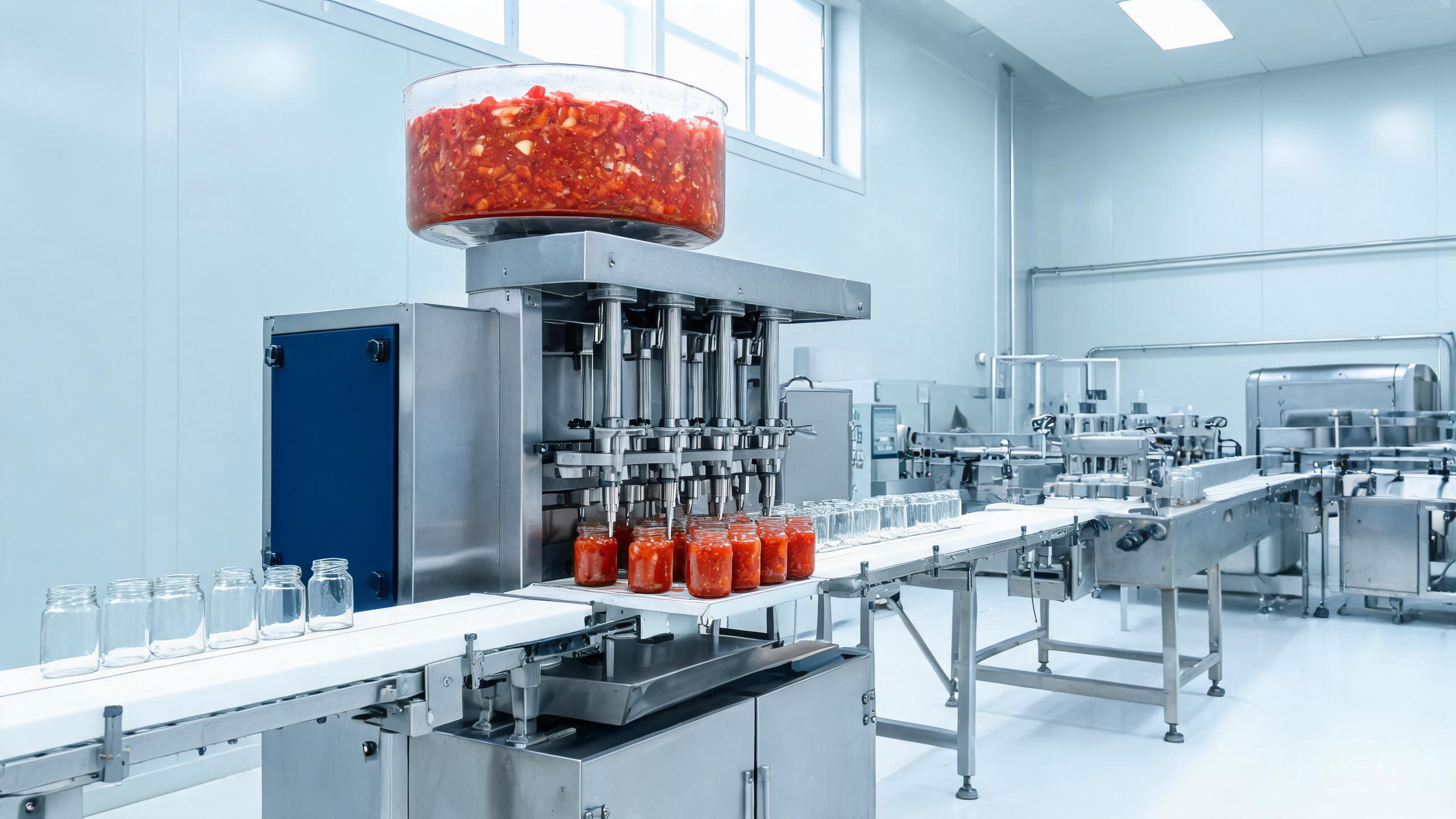
GT-L60
GT-L60 Metered Liquid Dosing System
Flow-meter based metered dosing station for free-flowing liquids, brines, sauces and additives — standalone or synchronised with GTX filling and tray-sealing lines.
Platform detailsSupported packaging formats
In context
Related applications and case studies
Sauces & Condiments
Butter hotpot base line with particulate consistency
A GTX-1800 configuration with jacketed agitated hopper replaced manual weighing for butter-based hotpot base, keeping chili flakes and spice particles evenly dosed into jars destined for European retailers.
Regional Sichuan hotpot-seasoning producer · China · EU export programme
Prepared Foods
Two-component dosing for private-label ready meals
GTX-1800 particulate filling paired with GT-L60 liquid dosing delivered solids-and-brine ready meal trays under shared recipe control.
Central European private-label ready-meal maker · Central Europe
Pet Food
Chunks-in-gravy wet pet food from cups to trays
A GTX-1800 platform configured for meat chunks in gravy across cups and trays, with quick-release changeovers between private-label brands.
North American wet pet food co-packer · North America
Planning a prepared-foods or multi-component line?
Send your recipe behaviour, inclusions, dose weights and tray or cup formats. Engineering responds with a platform layout and a sample-test plan — with parameters confirmed rather than promised.